

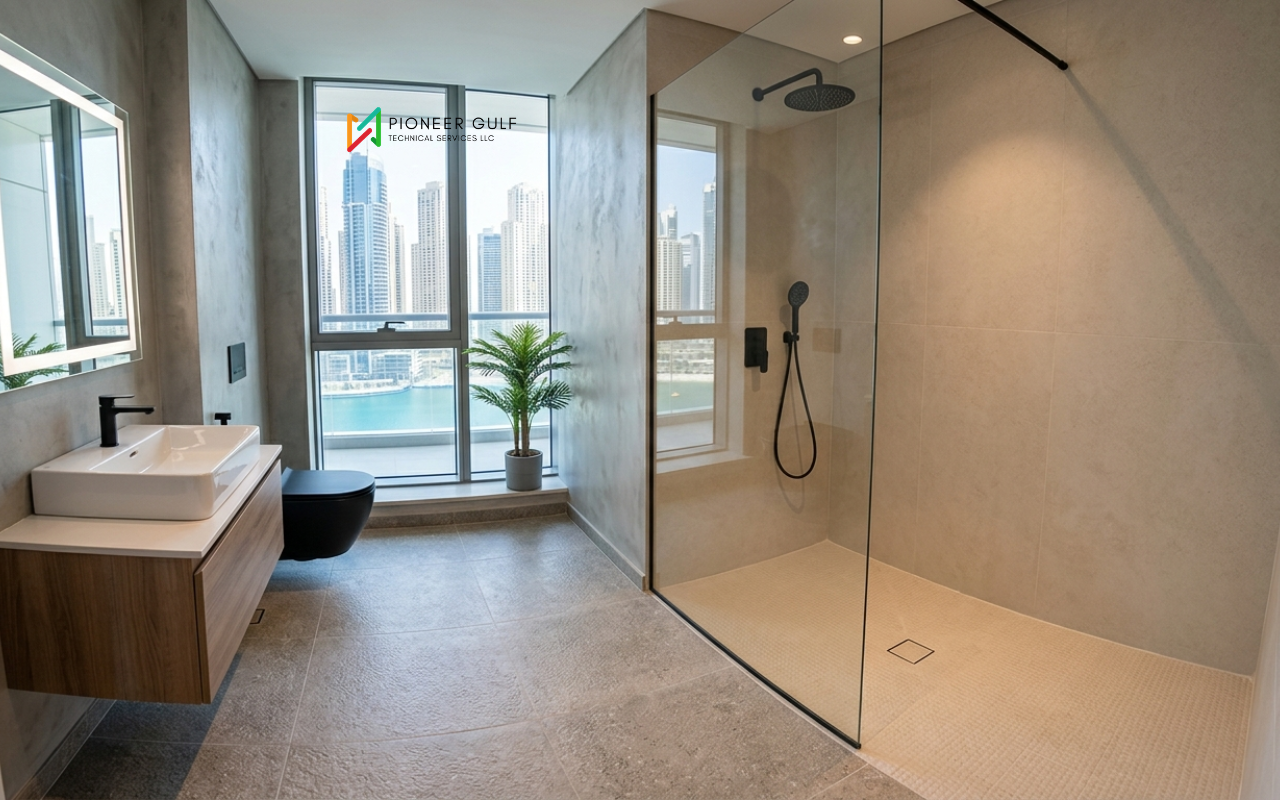
Water pools in the corner of your newly renovated bathroom three weeks after completion. The contractor assured you waterproofing was done properly. Now water is seeping into the adjacent bedroom, staining walls and damaging flooring.
Or the drainage is too slow. Water takes 5 minutes to clear from the shower floor despite the contractor claiming “proper slope.” You discover the hard way that “proper” meant guesswork, not actual measurements.
Or the tiles look beautiful in the showroom but become dangerously slippery when wet. Someone slips in the shower. The beautiful aesthetic choice becomes a safety liability.
Bathroom renovation in Dubai involves some of the most technically demanding work in residential properties. Unlike kitchens where mistakes might mean inconvenience, bathroom errors cause water damage, mold growth, structural issues, and safety hazards.
The bathroom looks simple—smaller room, fewer fixtures than a kitchen. But beneath those tiles lies critical waterproofing, precise drainage engineering, and moisture management systems that must work flawlessly for years. Rush these fundamentals, and you’ll pay for renovation twice—once for the initial work, again to fix failures properly.
This guide covers what experienced contractors know about bathroom remodeling in Dubai: the technical requirements that aren’t negotiable, the common mistakes that cause failures, and the planning steps that prevent expensive re-work.
What Bathroom Renovation in Dubai Includes
Surface-level understanding sees bathroom renovation as: remove old tiles, install new ones, replace fixtures, paint walls, done. This thinking leads directly to the problems described above.
Comprehensive bathroom remodeling dubai requires:
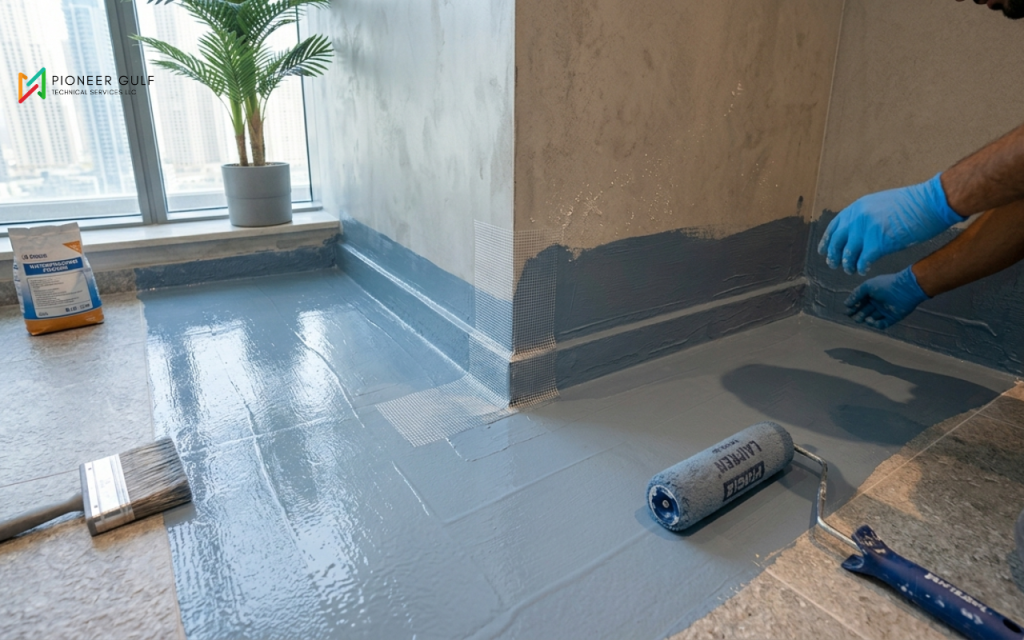
Complete Waterproofing System: Not just “waterproof paint” or surface coating. Proper waterproofing involves multiple layers—primer, membrane application, protection board, and final sealing. This system prevents water penetration into walls, floors, and adjacent spaces.
Engineered Drainage: Precise floor slope calculations (typically 1:80 to 1:100 ratio), proper trap installation, P-trap accessibility, and drainage line sizing ensuring water exits efficiently without standing or backing up.
Structural Assessment: Bathroom floors often need reinforcement supporting tile weight, especially natural stone. Load calculations ensure structural adequacy preventing future cracking or sagging.
Plumbing Rough-In: All supply lines (hot/cold water), drainage pipes, and fixture connections installed per Dubai Municipality plumbing code. Includes pressure testing before concealment.
Electrical Rough-In: Wiring for lighting, exhaust fans, heated towel rails, and any electrical fixtures. All electrical work in wet areas requires proper IP ratings and GFCI protection per Dubai electrical code.
Tile Installation: Proper substrate preparation, adhesive selection for Dubai climate, tile installation with correct spacing, and grouting. Quality installation prevents tile failure from thermal movement or moisture.
Fixture Installation: Toilets, sinks, showers, bathtubs installed per manufacturer specifications with proper sealing and secure mounting.
Ventilation System: Adequate air exchange preventing moisture accumulation, mold growth, and odor retention. Dubai apartments often connect to building central exhaust; villas need dedicated exhaust ducted outside.
Finishing Work: Mirrors, accessories, lighting fixtures, paint, trim, and final details completing the renovation.
Each layer must integrate properly. Waterproofing failure renders beautiful tile work irrelevant when water damages adjacent rooms. Perfect tile installation over inadequate drainage creates standing water and mold growth.
Waterproofing: The Foundation That Determines Success or Failure
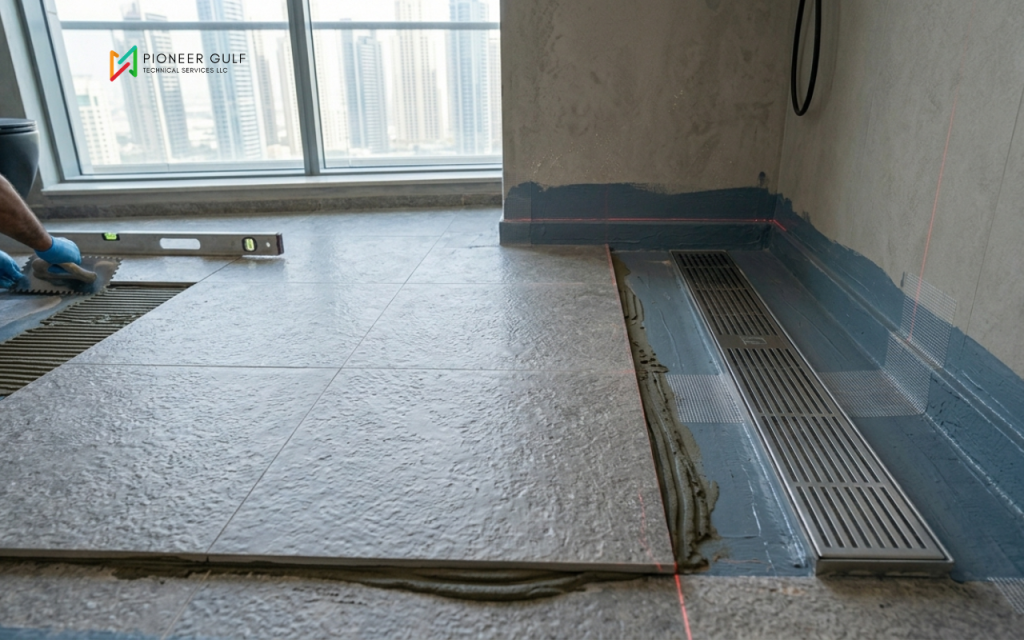
Waterproofing represents the most critical aspect of any bathroom renovation in Dubai. Done properly, it’s invisible and lasts 15-20+ years. Done poorly, it fails within months causing damage far exceeding original renovation cost.
Why Dubai Bathrooms Demand Superior Waterproofing:
Building Movement: Dubai’s temperature extremes cause building expansion and contraction. Rigid waterproofing cracks; flexible systems accommodate movement.
Water Pressure: High-rise buildings experience significant water pressure. Inadequate waterproofing fails under pressure allowing seepage.
Humidity Levels: Year-round humidity (60-90% at coast) means bathrooms never fully dry. Waterproofing must handle continuous moisture exposure.
Construction Quality Variance: Older Dubai properties often have substandard original waterproofing. Renovation must correct these deficiencies, not just cover them.
Multi-Story Implications: Apartment bathroom leaks affect units below. Liability for damage to neighbor’s property is significant—AED 50,000+ claims are common for water damage incidents.
Proper Waterproofing System Components:
Step 1: Surface Preparation Remove all existing finishes down to structural substrate (concrete, block). Repair any cracks, holes, or defects. Surface must be clean, dry, and sound before waterproofing application.
Step 2: Primer Application Specialized primer seals substrate and provides adhesion for waterproofing membrane. Primer choice depends on substrate type—different formulations for concrete vs. cement board.
Step 3: Waterproofing Membrane Two primary types used in Dubai:
Liquid Membrane: Brush or roller-applied, creates seamless barrier. Requires multiple coats (typically 2-3) building to specified thickness. Corners, joints, and penetrations need reinforcement fabric embedded in membrane.
Sheet Membrane: Pre-fabricated sheets applied with adhesive. Provides uniform thickness. Seams require careful attention—failures typically occur at joins.
Professional contractors in Dubai typically use liquid membranes for residential bathrooms due to easier application around complex shapes and penetrations.
Step 4: Protection Layer After membrane cures, protection board or additional cement screed protects waterproofing from damage during subsequent work.
Step 5: Testing Flood test (water ponding 24-48 hours) verifies waterproofing integrity before tiling. This catches failures when correction is easy, not after tile installation.
Critical Waterproofing Areas:
Wet Areas: Full wall-to-wall floor waterproofing extending minimum 150mm up walls. Shower areas require waterproofing extending 1800mm height minimum (full wall height preferred).
Corners: Internal and external corners reinforced with fabric strips preventing crack propagation at stress points.
Penetrations: All pipe penetrations, drains, fixture mounts sealed with waterproof collars preventing water ingress around openings.
Joints: Floor-wall joints (most vulnerable area) receive extra reinforcement—minimum two layers of fabric embedded in membrane.
Behind Fixtures: Wall areas behind toilets, sinks, and bathtubs waterproofed preventing moisture accumulation and mold growth.
Common Waterproofing Failures:
Inadequate preparation (dirty or damp surfaces) Single coat application (insufficient thickness) Skipping corners and penetration detailing No flood testing before tiling Using paint-type “waterproofing” products instead of proper membrane systems Applying waterproofing over unsuitable substrates Insufficient curing time before tiling
Any of these shortcuts leads to failure. Water finds every weakness. A 1mm gap in waterproofing allows water penetration causing damage far beyond that tiny opening.
Drainage Engineering: More Complex Than It Appears
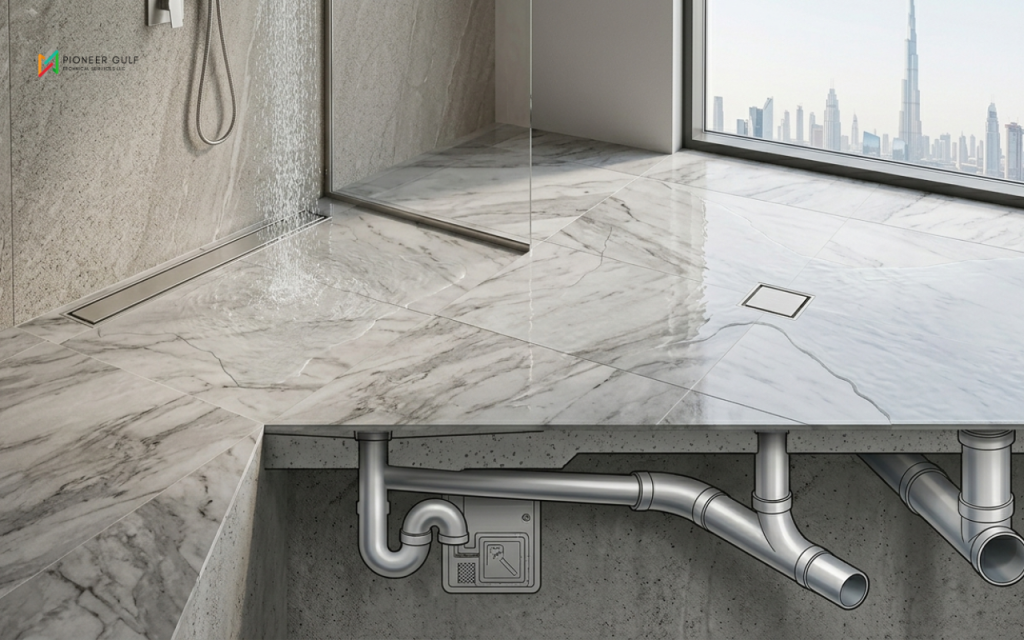
“Water flows downhill” seems simple. In bathroom renovation, proper drainage involves precise engineering ensuring water flows where intended, at correct speed, without standing or backing up.
Drainage Slope Requirements:
Dubai Municipality standards specify minimum floor slopes for wet areas. Typical requirements:
Shower Floors: Minimum 1:80 slope (1.25% grade) toward drain. This means for every 80cm of distance, floor drops 1cm. Steeper slopes (1:60) provide better drainage but can feel awkward underfoot.
Bathroom Floors: General floor areas require minimum 1:100 slope toward drains or thresholds preventing water accumulation.
Slope Calculation Complexity: Multi-drain bathrooms need slopes calculated from multiple directions. Shower floor might slope toward center drain while general floor slopes toward doorway. These slopes must blend smoothly preventing water pools.
Floor Height Considerations:
Creating proper slope often requires raising floor height:
- 50mm minimum for thin-bed tile installation with slope
- 75-100mm for substantial slope or thick stone tiles
- 100-150mm if drainage relocation is required
This elevation affects:
- Door clearance (may need door shortening)
- Transition to adjacent rooms (threshold height)
- Overall ceiling height perception
- Fixture rough-in heights
Contractors must verify these dimensions before starting. Discovering insufficient height mid-project requires re-work or compromised drainage.
Drain Placement Strategy:
Linear Drains: Modern shower drains spanning one wall edge. Advantages:
- Simpler floor slope (one direction)
- Easier waterproofing (fewer penetrations)
- Better aesthetic (minimal visible drain)
- Faster water drainage (larger opening)
Disadvantages:
- More expensive (AED 500-1,500 vs. AED 150-400 for point drains)
- Requires precise installation
- Limited placement flexibility
Point Drains: Traditional center or corner drains. Advantages:
- Lower cost
- Proven reliability
- Easy replacement
- Flexible placement
Disadvantages:
- Complex multi-directional slopes required
- More visible in floor
- Smaller opening (slower drainage)
Drainage Pipe Sizing:
Undersized drainage causes slow clearing and potential backups.
Minimum Pipe Sizes:
- Shower drains: 50mm diameter
- Floor drains: 50mm diameter
- Toilet drainage: 100mm diameter
- Main bathroom drainage: 75-100mm diameter
Older Dubai properties sometimes have undersized drains. Renovation should upsize if possible preventing future issues.
P-Trap Requirements:
Every drain requires P-trap (curved pipe section holding water) preventing sewer gases from entering bathroom.
P-Trap Considerations:
- Adequate depth below floor for trap installation
- Accessibility for cleaning (traps accumulate hair, soap, debris)
- Proper venting preventing slow drainage
- Quality materials (ABS or PVC, not cheap plastics)
Hidden P-traps under concrete are maintenance nightmares. Accessible traps (via panels or raised floor sections) allow cleaning preventing blockages.
Testing Drainage Before Finishing:
Professional contractors test drainage before tile installation:
- Install all drainage pipes
- Fill shower area with water
- Observe drainage speed and complete clearing
- Check for leaks at all connections
- Verify P-traps hold water (gas seal function)
Discovering drainage problems after tiling requires tile removal for corrections—expensive and disruptive.
Common Drainage Mistakes:
Inadequate slope (water pools) Reverse slope areas (water flows wrong direction) Undersized drains (slow clearing) No P-trap accessibility (future maintenance impossible) Drainage pipes with inadequate fall (backups and slow drains) Multiple drains at same height (one drains, others don’t) Floor penetrations interfering with drainage slope
Proper drainage requires planning, calculation, and verification—not guesswork.
Tile Selection and Installation for Dubai Bathrooms
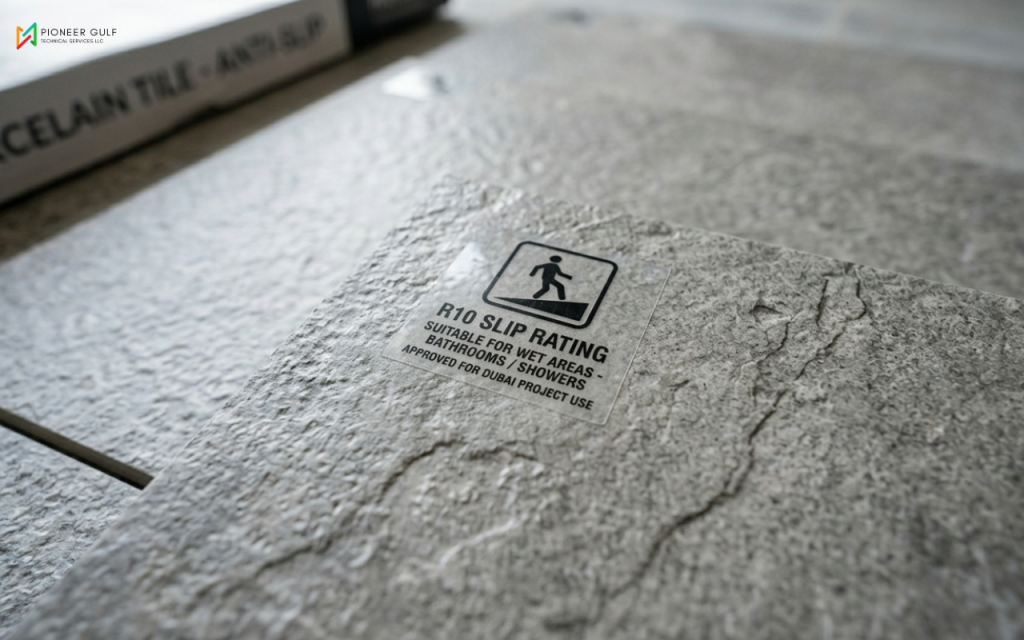
Tile choice affects safety, durability, and maintenance requirements. Poor selection creates hazards; poor installation causes premature failure.
Tile Selection Criteria:
Slip Resistance (Critical Safety Factor):
Wet tile becomes slippery. Slip resistance ratings matter:
R-Rating System:
- R9: Minimal slip resistance (unsuitable for wet areas)
- R10: Basic slip resistance (acceptable for general bathroom floor)
- R11: Good slip resistance (recommended for shower floors)
- R12-R13: Excellent slip resistance (commercial/special needs)
Alternative: Coefficient of Friction (COF)
- Wet COF >0.42: Minimum safe level
- Wet COF >0.60: Preferred for showers
Request slip resistance data before purchasing. Beautiful glossy tiles are dangerous when wet.
Porcelain vs. Ceramic:
Porcelain Tile:
- Lower water absorption (<0.5%)
- Harder and more durable
- Better for Dubai humidity
- More expensive
- Recommended for bathroom floors
Ceramic Tile:
- Higher water absorption (3-7%)
- Softer, chips more easily
- Less expensive
- Acceptable for walls in dry areas
Dubai bathrooms should use porcelain for floors and wet areas, ceramic acceptable for walls away from direct water exposure.
Size Considerations:
Large Format Tiles (60×60cm, 80×80cm, 120×60cm):
- Fewer grout lines (easier cleaning, less mold)
- Modern aesthetic
- Require flatter substrate (more prep work)
- More waste if cutting required
- Heavier (structural consideration)
Medium Tiles (30×30cm, 30×60cm):
- Balance between aesthetics and practicality
- Easier slope accommodation
- Less waste
- Standard installation difficulty
Small Tiles/Mosaics:
- More grout lines (maintenance intensive)
- Better slip resistance (grout provides texture)
- Easier on curved surfaces
- More expensive installation (labor intensive)
Natural Stone vs. Porcelain:
Natural Stone (Marble, Granite, Travertine):
- Beautiful, unique appearance
- Requires sealing (maintenance)
- Some types etch from acidic cleaners
- Expensive
- Heavy
Porcelain (Including Stone-Look):
- Consistent appearance
- No sealing required
- Stain resistant
- Lower maintenance
- Lighter weight
For Dubai bathrooms with humidity and cleaning product use, porcelain offers better long-term performance than most natural stone.
Tile Installation Quality Factors:
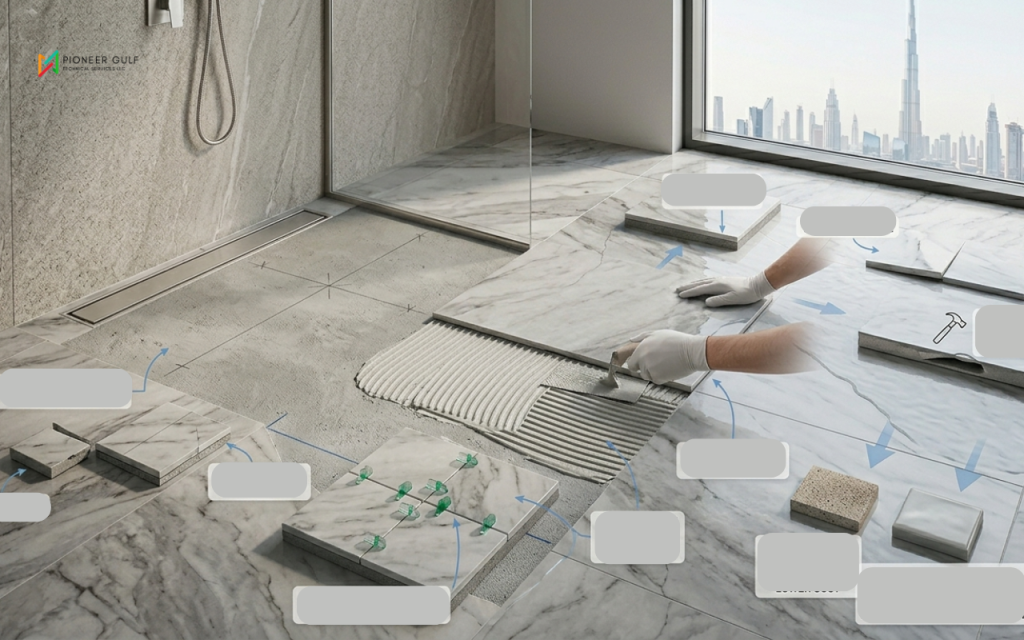
Substrate Preparation: Flat, sound, clean surface is essential. Uneven substrates cause tile lippage (edges at different heights), cracking, and premature failure.
Adhesive Selection: Flexible adhesive accommodates building movement. Dubai temperature changes require adhesives rated for thermal cycling. Using cheap or wrong adhesive type causes tile debonding.
Spacer Usage: Consistent grout joint width (typically 2-3mm for wall tiles, 3-5mm for floor tiles) allows grout to properly fill joints and accommodate movement.
Back Buttering: Applying adhesive to both substrate and tile back ensures 95%+ coverage. Spot-application creates voids leading to hollow tiles that crack under use.
Layout Planning: Professional installers plan layouts avoiding tiny cut pieces, achieving symmetry, and ensuring cut edges occur in less visible areas.
Setting Time: Adequate curing before grouting and before use. Rushing causes tile movement, grout cracking, and bond failure.
Grout Selection:
Cement Grout:
- Standard option
- Requires sealing
- Can stain
- Lower cost
- Suitable for joints 2-10mm
Epoxy Grout:
- Stain resistant
- No sealing required
- Chemical resistant
- More expensive
- Harder installation
- Recommended for Dubai bathrooms (humidity resistance)
Grout Joint Width: Narrower joints (2mm) look modern but offer less movement accommodation. Wider joints (5mm) handle movement better but show dirt more. Balance aesthetics and practicality.
Common Tile Installation Failures:
Poor substrate preparation (lippage, cracking) Inadequate adhesive coverage (hollow tiles, debonding) Wrong adhesive type (thermal movement failure) Inadequate expansion joints (cracking at stress points) Grouting too soon (tile movement) Unsealed grout in wet areas (staining, mold) Cutting tiles wet without allowing drying (water behind tiles)
Quality tile installation costs 30-40% more than cheap work. But cheap work fails within 2-3 years requiring complete re-tiling at greater total cost.
Ventilation: The Overlooked Critical System
Poor ventilation doesn’t cause immediate obvious problems like waterproofing failure. Instead it creates gradual deterioration—mold growth, odor accumulation, material degradation, and health impacts from poor air quality.
Why Dubai Bathrooms Need Superior Ventilation:
Year-Round Humidity: Dubai bathrooms generate moisture from showers, baths, sink use. Without adequate ventilation, humidity stays trapped causing:
- Mold and mildew growth on walls, ceilings, grout
- Paint peeling and degradation
- Seal deterioration around fixtures
- Unpleasant odors
- Respiratory irritation
Enclosed Spaces: Many Dubai bathrooms lack windows. Mechanical ventilation is the only moisture removal method.
Warm Temperatures: Warm air holds more moisture than cool air. Dubai’s heat allows significant moisture accumulation in bathrooms.
Ventilation System Requirements:
Air Change Rate: Building codes typically require minimum 6-8 air changes per hour in bathrooms. This means entire bathroom air volume is exchanged 6-8 times hourly when ventilation operates.
Calculation Example: 3m × 2m × 2.5m bathroom = 15 cubic meters Required air changes: 8 per hour Minimum fan capacity: 15m³ × 8 = 120 cubic meters per hour (m³/h)
Exhaust Fan Sizing: Residential bathroom fans typically range 80-150 m³/h capacity. Choose fan capacity based on bathroom volume and usage intensity.
Ducting Requirements:
Apartment Bathrooms: Most Dubai apartments have central exhaust systems. Individual bathroom fans connect to vertical exhaust shafts. Requirements:
- Smooth duct interior (reduces resistance)
- Minimum bends (each bend reduces efficiency)
- Proper sizing (typically 100-150mm diameter)
- Backdraft damper (prevents odor from other units)
- Accessible connections (maintenance access)
Villa Bathrooms: Must exhaust directly outside, not into attic spaces. Requirements:
- Shortest possible duct run
- Proper exterior termination (bird/insect screens, weather protection)
- Adequate slope preventing condensation accumulation
- Insulation in unconditioned spaces
Fan Placement: Position exhaust fans near or above shower/bath (highest moisture generation). Intake air should flow from dry areas toward wet areas, not vice versa.
Control Options:
Manual Switch: Simplest control. Requires user discipline turning fan on during use and leaving running 15-20 minutes after.
Timer Switch: Fan runs for preset time (15-30 minutes) after switch activation. Better moisture removal than manual.
Humidity Sensor: Automatic operation when humidity exceeds threshold. Most reliable option ensuring adequate ventilation without user intervention. More expensive but prevents ventilation failures from user neglect.
Continuous Low-Speed with Boost: Constant low-level ventilation with high-speed boost during use. Excellent moisture control, higher energy cost.
Common Ventilation Mistakes:
Undersized fans (inadequate capacity) Excessive duct runs (reduced performance) No backdraft damper (odor intrusion) Ducting into attic instead of outside (moisture problems) Fan positioned away from moisture source (ineffective) No automatic controls (user-dependent operation fails) Blocked or restricted vents (defeats purpose)
Proper ventilation costs AED 500-1,500 for quality fan and installation. Inadequate ventilation causes mold remediation costs (AED 2,000-5,000+) and material degradation requiring premature bathroom renovation.
Approvals and Regulations for Bathroom Renovation in Dubai
Like kitchen renovations, bathroom projects require various approvals depending on property type and scope. Proceeding without approvals creates legal complications and potential financial penalties.
Apartment Bathroom Renovations:
Building Management Approval: Submit renovation application typically 7-14 days before starting work:
Required Documentation:
- Floor plan showing bathroom modifications
- Waterproofing methodology and materials specification
- Contractor trade license and insurance certificates
- Timeline and working hours schedule
- Waste disposal plan
- Refundable deposit (typically AED 1,000-3,000)
Working Hours Restrictions: Most buildings limit noisy work to 9:00 AM – 5:00 PM, Saturday through Thursday. Friday work often prohibited. Violations result in complaints and potential work stoppage.
Common Area Protection: Contractors must protect elevators, lobbies, and corridors during material transport. Damage to common areas results in deposit forfeiture and additional charges.
Waterproofing Requirements: Buildings often require waterproofing certification from approved applicators. This protects building and neighbors from water damage liability.
Inspection Requirements: Some buildings require management inspection at waterproofing stage before allowing tile installation. Schedule these to avoid delays.
Villa Bathroom Renovations:
Community Management Approval: Gated communities (Emirates Hills, Arabian Ranches, Palm Jumeirah, etc.) typically require renovation approval even for villas:
Application Requirements:
- Renovation plans and scope description
- Contractor details
- Timeline
- Compliance with community design guidelines
Processing time: 7-14 days typically.
Dubai Municipality Permits: Major renovations affecting structure or creating additional bathrooms may require Municipality permits:
Permit Triggers:
- Structural modifications
- Adding bathrooms (increases property value/density)
- Changing drainage systems significantly
- Work affecting building envelope
Processing Time: Municipality permit processing typically takes 2-4 weeks. Factor this into project timeline.
Waterproofing Standards: Even villas must meet Dubai Municipality waterproofing standards. Professional contractors should know and follow these requirements.
Consequences of Skipping Approvals:
Immediate Risks:
- Work stoppage orders
- Fines from building management or Municipality
- Contractor penalties
- Project delays
Long-Term Implications:
- Difficulty obtaining completion certificates
- Problems when selling property (buyers’ mortgage banks verify approvals)
- Liability for damages if waterproofing fails affecting neighbors
- Insurance claim complications
Budget 1-3 weeks for approval processing. Never demolish or start work before securing all required approvals.
Combining Bathroom Renovation with Other Property Services
Bathroom renovations create access to hidden systems. Strategic property owners use this opportunity for preventive maintenance reducing future disruption.
Services to Combine with Bathroom Renovation:
Drain Cleaning and Inspection: Access to drainage systems during renovation allows comprehensive drain cleaning, camera inspection, and preventive treatment. Address slow drains, buildup, and potential blockages before new bathroom is installed.
Plumbing Maintenance:
- Replace old shutoff valves while walls are open
- Upgrade undersized supply lines
- Add or relocate fixtures more easily than after renovation
- Inspect water heater if nearby
- Install water pressure regulators if needed
Water Tank Cleaning: If property has overhead or underground storage tanks, clean these before bathroom renovation ensuring clean water to new fixtures.
AC System Service: Bathroom renovations often affect ceiling-mounted AC units or vents. Coordinate:
- AC maintenance during renovation
- Duct cleaning service
- Unit repositioning if bathroom layout changes
- Condensate drain verification
Adjacent Space Updates: Small closet adjacent to bathroom? Master bedroom needing refresh? Coordinate work reducing total disruption period and potentially sharing contractor mobilization costs.
Waterproofing Adjacent Areas: If renovating one bathroom, consider waterproofing the adjacent bathroom’s floor while contractors are mobilized and materials are on-site. Marginal cost is small compared to future mobilization.
Electrical Panel Upgrades: Adding electrical loads (heated towel rails, exhaust fans, additional lighting) may require panel upgrades. Address during renovation when walls are open.
Comprehensive planning prevents needing to disturb newly renovated spaces for maintenance that could have been addressed during construction.
Frequently Asked Questions
A: Timeline depends on scope and complexity. Standard bathroom renovation (waterproofing, tiling, fixture replacement):
- Approval processing: 7-14 days
- Demolition and disposal: 1-2 days
- Plumbing rough-in: 2-3 days
- Waterproofing application and curing: 3-5 days
- Floor slope preparation: 2-3 days
- Tile installation: 5-7 days
- Grout curing: 2-3 days
- Fixture installation: 2-3 days
- Finishing work: 2-3 days
- Final cleaning and snagging: 1-2 days
Total realistic timeline: 4-6 weeks from approval to completion. Custom features, natural stone, or structural modifications extend timelines to 6-10 weeks. Always add contingency time for unforeseen discoveries or material delays.
A: Waterproofing is the foundation preventing water damage, mold growth, and structural deterioration. Dubai’s specific challenges include:
- High humidity (year-round moisture exposure)
- Building movement from temperature cycles (requires flexible waterproofing)
- Multi-unit liability (apartment leaks affect neighbors)
- No natural drying periods (warm humid climate)
Waterproofing failure costs AED 15,000-60,000+ to remediate (tile removal, proper waterproofing, re-tiling, adjacent damage repair) versus AED 1,500-3,000 for doing it properly initially. It’s the one aspect where cutting costs guarantees future expense.
A: Comprehensive bathroom renovation includes:
Preparation:
- Complete demolition and disposal
- Substrate preparation and repairs
Core Work:
- Multi-layer waterproofing system (primer, membrane, protection)
- Drainage system with proper slope engineering
- Plumbing rough-in (supply, waste, venting)
- Electrical rough-in (lighting, fans, accessories)
Finishing:
- Tile installation (floor, walls, shower area)
- Grouting and sealing
- Fixture installation (toilet, sink, shower, bathtub)
- Ventilation system (exhaust fan, ducting)
- Lighting and accessories
- Mirrors and finishing touches
- Final cleaning
Verify scope details in written quotations. Some contractors exclude waterproofing testing, grout sealing, or specific fixtures unless specified.
A: Most common failure causes:
Waterproofing Issues (70% of failures):
- Single-coat application (inadequate thickness)
- Poor surface preparation
- Skipped corner and penetration detailing
- No flood testing before tiling
- Using paint-type products instead of proper membranes
Drainage Problems (20% of failures):
- Inadequate slope (water pools)
- Undersized drains (slow clearing)
- Poor P-trap installation
- No drainage testing before tiling
Installation Defects (10% of failures):
- Poor tile adhesion (inadequate coverage)
- Wrong adhesive type (movement failure)
- Unsealed grout (water penetration)
- Cheap materials (premature deterioration)
Prevention requires: proper waterproofing system, engineered drainage, quality materials, professional installation, and testing before concealment.
A: Costs vary significantly based on size, finishes, and scope:
Small Bathroom (4-5 sqm):
- Budget renovation: AED 15,000-25,000
- Mid-range renovation: AED 25,000-40,000
- Premium renovation: AED 40,000-65,000+
Medium Bathroom (6-8 sqm):
- Budget renovation: AED 25,000-40,000
- Mid-range renovation: AED 40,000-65,000
- Premium renovation: AED 65,000-100,000+
Large Master Bathroom (10-15 sqm):
- Budget renovation: AED 40,000-65,000
- Mid-range renovation: AED 65,000-100,000
- Premium renovation: AED 100,000-180,000+
Budget includes waterproofing, tiling, plumbing, electrical, fixtures, and installation. Premium finishes (natural stone, designer fixtures, custom features) increase costs significantly. Add 15-20% contingency for unforeseen issues.
A: Might be No. (Depends on scope) Active bathroom often renovation requires:
- Water shutoff for plumbing work
- Complete access for waterproofing and tiling
- Drying/curing time (no usage during this period)
- Safety concerns (electrical work, wet surfaces, construction hazards)
Bathrooms are unusable for 3-5 weeks typically during renovation. Plan accordingly:
- Coordinate with family members for other bathroom usage
- Consider temporary accommodations if renovating only bathroom
- Schedule renovation during periods when inconvenience is minimized
Some contractors allow toilet installation mid-project for essential use, but this should not be expected or relied upon.
A: Phasing bathroom renovation is problematic and often costs more:
Why Phasing Doesn’t Work Well:
- Waterproofing must be continuous (can’t do half now, half later)
- Opening walls twice costs more than doing it once
- Tiling around existing fixtures creates weak points and poor aesthetics
- Plumbing work requires complete access
- Coordination challenges increase total labor cost
If Budget is Constrained: Better approaches than phasing:
- Reduce scope (smaller bathroom first, master later)
- Use mid-range instead of premium finishes throughout
- Select cost-effective tile that still meets quality standards
- Keep layout unchanged (no plumbing relocation)
- Phase adjacent spaces instead (bathroom now, bedroom later)
Complete bathroom renovation properly once rather than attempting partial work requiring future re-work.
A: Slip resistance depends on several factors:
Surface Finish:
- Glossy/polished tiles: Low friction when wet (dangerous)
- Matte/textured finish: Higher friction (safer)
- Structured surface (grooves, texture): Best slip resistance
Tile Rating: Check slip resistance rating:
- R9 or lower: Unsafe for wet areas
- R10: Minimum acceptable
- R11: Recommended for showers
- R12-R13: Excellent (may feel rough underfoot)
Alternative: COF (Coefficient of Friction)
- Wet COF <0.42: Unsafe
- Wet COF >0.42: Acceptable
- Wet COF >0.60: Preferred
Prevention:
- Always request slip resistance data before purchasing
- Test tiles in showroom (water test if possible)
- Prioritize safety over aesthetics for floor tiles
- Save glossy tiles for walls, use textured for floors
- Consider smaller tiles (more grout = more texture)
Beautiful tiles that cause slips are poor choices. Verify slip resistance ratings, not just appearance.