

Your kitchen design vision is clear. You’ve browsed showrooms, saved Pinterest boards, and sketched the layout. You’re ready to transform your dated Dubai kitchen into a modern culinary space.
Then reality intrudes.
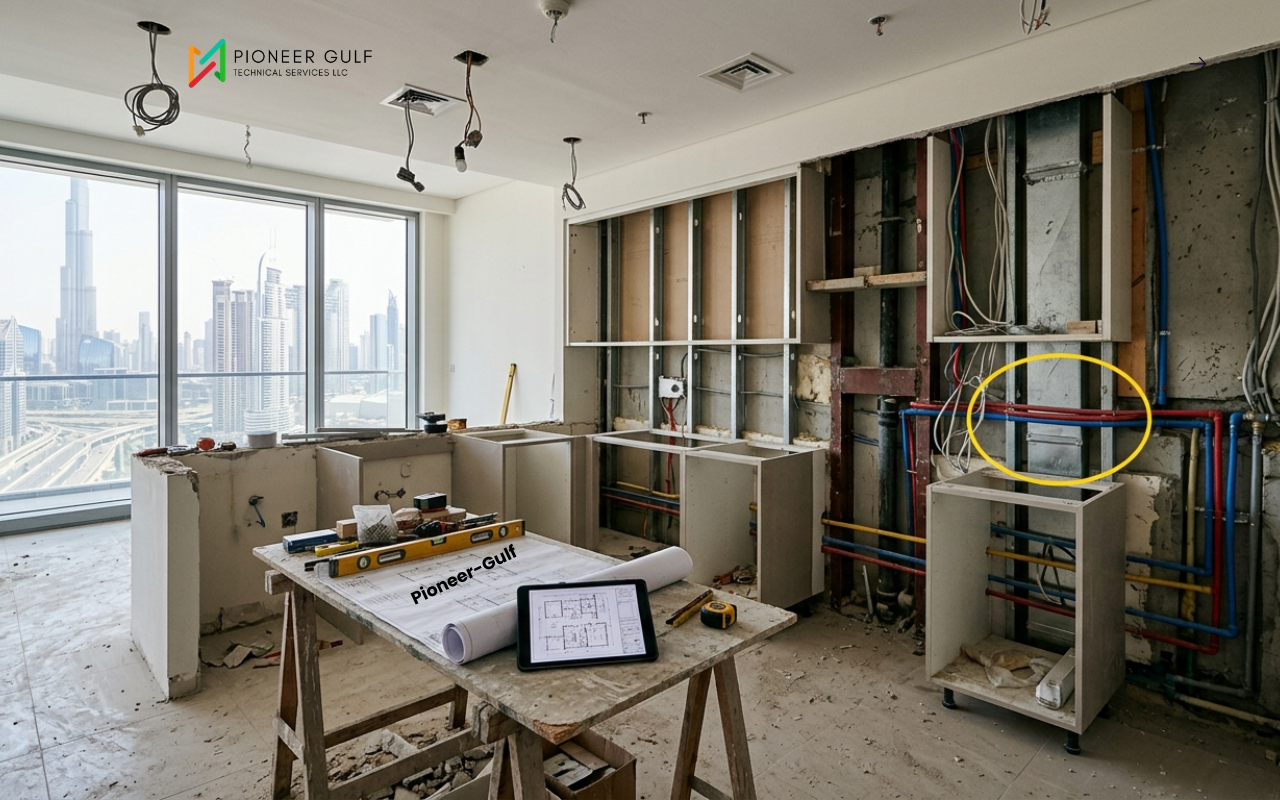
The contractor explains your chosen cabinet size won’t fit because of unexpected electrical conduit placement behind the wall. Your building management rejects the renovation application because you didn’t submit floor plans showing plumbing modifications. The granite supplier’s lead time is eight weeks—four weeks longer than quoted—delaying your entire project.
What seemed like a straightforward kitchen upgrade becomes a coordination nightmare involving multiple trades, unexpected structural discoveries, and approval processes you didn’t know existed.
Kitchen renovation in Dubai involves more complexity than most homeowners anticipate. Success requires understanding not just design preferences but technical requirements, approval procedures, and practical execution challenges specific to UAE properties.
This guide addresses what experienced renovation contractors wish every client understood before starting kitchen remodeling in Dubai.
What Kitchen Renovation in Dubai Actually Involves
When people search for kitchen renovation services, they focus on aesthetics—beautiful cabinets, stylish countertops, modern appliances. These matter, but they represent the visible 30% of actual work required.
Comprehensive kitchen remodeling dubai encompasses:
Structural Assessment: Evaluating load-bearing walls if layout changes are planned. In Dubai apartments, many walls are structural—removal requires engineering assessment and Dubai Municipality approval. Villas offer more flexibility but still have limitations.
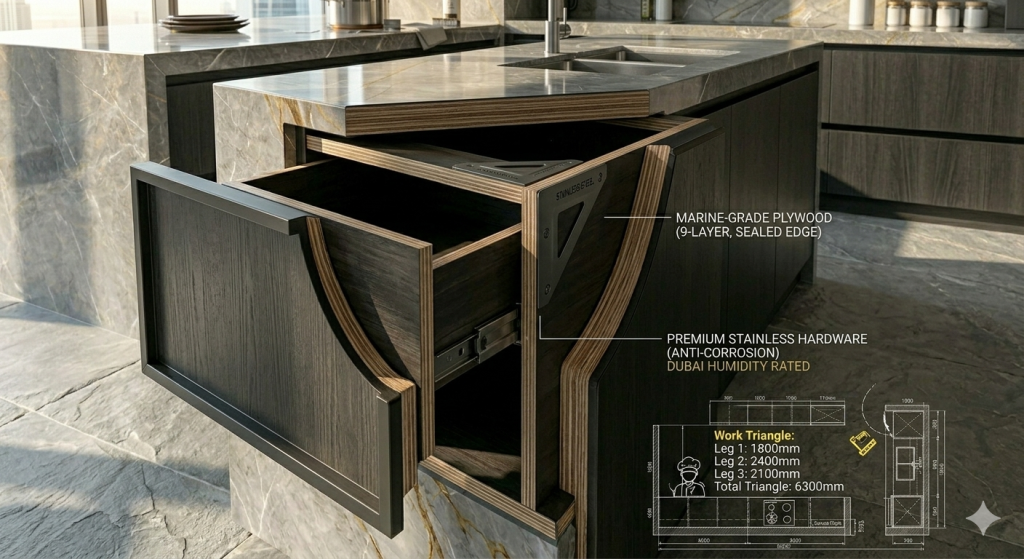
Cabinet Work: Custom or semi-custom cabinetry design, fabrication, and installation. This includes base cabinets, wall units, pantry systems, and specialized storage. Quality varies dramatically—cheap cabinets fail within 2-3 years in Dubai’s humidity, while proper marine-grade plywood construction lasts 10-15 years.
Countertop Installation: Natural stone (granite, marble), engineered quartz, or solid surface materials require precise measurement, fabrication, and installation. Dubai’s heat affects some materials—verify suitability before selection.
Plumbing Modifications: Relocating sinks, adding prep sinks, installing dishwasher connections, and upgrading drainage. Older Dubai properties often have undersized pipes requiring replacement for modern appliance loads.
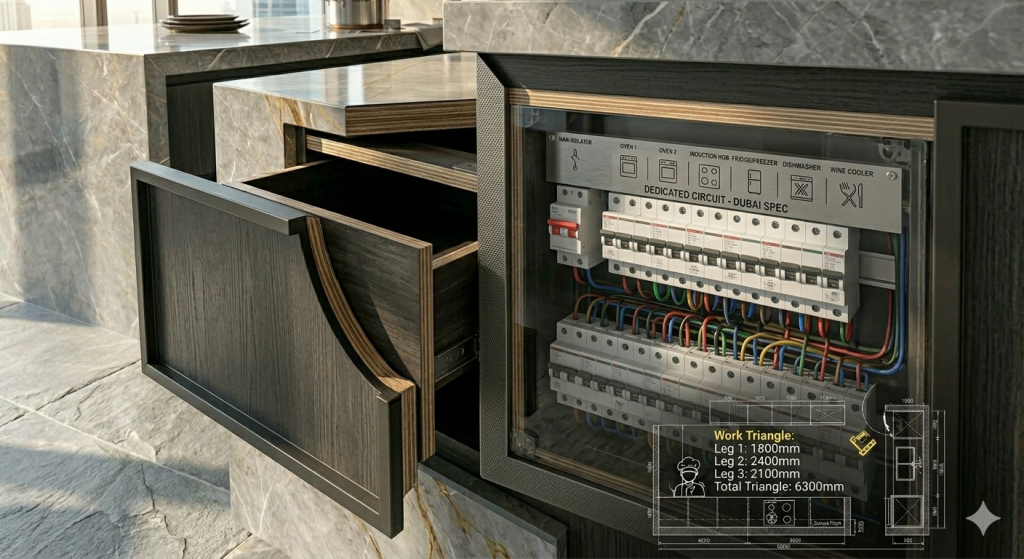
Electrical Upgrades: Modern kitchens demand significant power—refrigerators, ovens, microwaves, dishwashers, small appliances. Older properties typically need complete circuit additions and load calculations ensuring electrical panel capacity.
Ventilation Systems: Proper kitchen ventilation prevents odor transfer, reduces humidity, and maintains air quality. Dubai apartments often have centralized exhaust requiring coordination with building management. Villas need appropriate ducting and external venting.
Flooring Installation: Tile, stone, or wood-look materials suitable for kitchen environments. Proper substrate preparation and waterproofing prevent future issues.
Finishing Work: Backsplash installation, painting, trim work, lighting fixtures, and final touches completing the transformation.
Each element must integrate seamlessly. Poor coordination creates problems: cabinets arriving before electrical work completes, countertop templating before cabinets are properly leveled, or appliances that don’t fit chosen cabinet configurations.
Layout Planning: Where Most Kitchen Renovations Go Wrong
Poor layout decisions cause more dissatisfaction than any other renovation aspect. Fixing layout mistakes after installation ranges from expensive to impossible.
The Kitchen Work Triangle Principle:
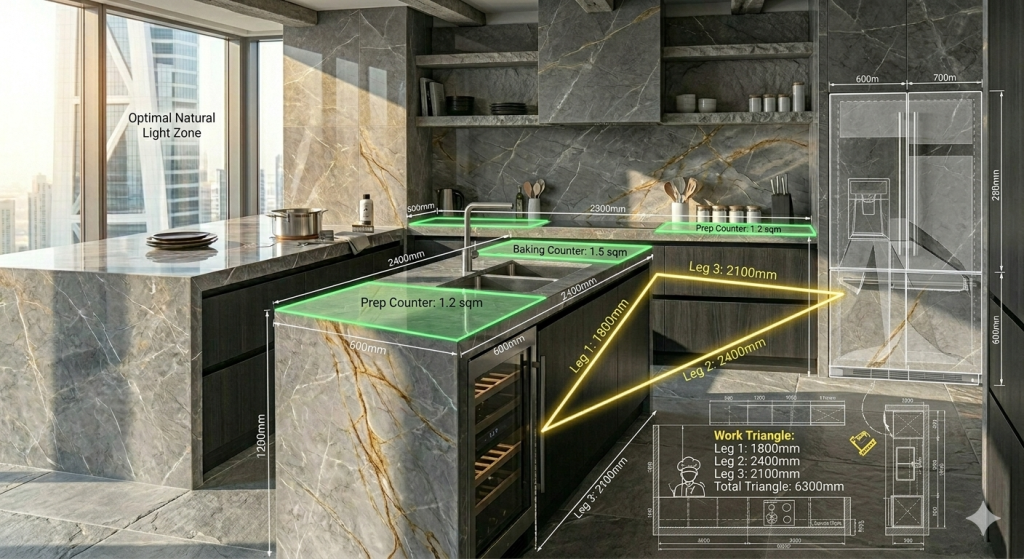
Professional kitchen design follows the work triangle concept—efficient spacing between sink, refrigerator, and cooking surface. Each leg should measure 4-9 feet. Too close creates congestion; too far creates inefficiency.
Dubai villas typically allow flexible triangle configuration. Apartments constrain options due to fixed plumbing locations and structural walls.
Common Layout Mistakes in Dubai Kitchens:
Inadequate Counter Space: Cramming too many appliances and sinks into limited linear space leaves no food preparation area. Minimum 36 inches of continuous counter space should exist near the main sink; ideally 42-48 inches.
Poor Ventilation Placement: Range hoods must align with cooking surfaces and have proper clearance. Dubai building codes typically require minimum distances above cooktops. Incorrect placement reduces effectiveness and may violate regulations.
Insufficient Storage Planning: Counting only base and wall cabinets without considering tall pantry storage, corner solutions, and specialized organizers. Dubai properties often lack dedicated pantries—kitchen storage must compensate.
Ignoring Appliance Clearances: Refrigerators need door-swing clearance plus ventilation space. Dishwashers require plumbing access panels. Ovens need heat-safe adjacent surfaces. Blocking these creates functional problems.
Traffic Flow Obstruction: Kitchen islands look attractive but shouldn’t create bottlenecks. Minimum 42 inches of clearance should exist on all sides for comfortable movement; 48 inches is preferable if multiple cooks use the space.
Window and Door Conflicts: Placing cabinets or appliances where they block windows, interfere with door swings, or cover access panels for building utilities. Check all swing paths before finalizing placement.
Electrical Outlet Scarcity: Dubai electrical codes specify outlet requirements, but minimum code doesn’t mean optimal placement. Plan outlets where you’ll actually use appliances—not just where code requires them.
Avoiding these mistakes requires detailed planning before demolition begins. Quality contractors provide 3D renderings showing exact placements. Review these carefully—catching issues on-screen costs nothing; discovering them after installation costs thousands.
Plumbing and Electrical Work: The Hidden Foundation
Kitchens demand more plumbing and electrical infrastructure than any other room. Mistakes here create long-term problems—leaks, inadequate power, code violations.
Plumbing Considerations for Kitchen Renovation:
Water Pressure Assessment: Dubai properties vary in water pressure. High-rise apartments often have pressure issues affecting dishwasher and ice maker performance. Solutions include booster pumps or pressure-compensating fixtures.
Drainage Slope Requirements: Sinks and dishwashers need proper drainage slope preventing backups. Relocating sinks often requires raising floor areas or lowering drain lines—both impact overall design.
Hot Water Access: If your kitchen is far from the water heater, consider a small under-sink instant heater. Waiting minutes for hot water wastes water and time.
Supply Line Sizing: Modern fixtures and appliances require adequate water supply. Undersized lines restrict flow creating poor performance. Upgrading from 1/2-inch to 3/4-inch lines improves function significantly.
Leak Prevention: Quality shut-off valves under sinks allow quick water cutoff for repairs. Braided stainless supply lines last longer than plastic. Proper installation prevents the leaks that damage cabinets and floors.
Professional plumbing services in Dubai should verify all these aspects before cabinet installation. Discovering plumbing problems after cabinetry is installed requires cabinet removal for repairs—expensive and disruptive.
Electrical Requirements for Modern Kitchens:
Load Calculation: Modern kitchens can draw 50-80 amps during peak use. Older electrical panels may not support this load. Professional electrical services should calculate total demand and verify panel capacity.
Dedicated Circuits: Major appliances need dedicated circuits:
- Refrigerator: 15-20 amp circuit
- Dishwasher: 15 amp circuit
- Garbage disposal: 15 amp circuit
- Microwave: 20 amp circuit
- Electric oven/range: 40-50 amp circuit (220V)
GFCI Protection: Dubai electrical codes require ground-fault protection near water sources. All counter outlets should have GFCI protection preventing electrical shock.
Lighting Circuits: Separate lighting circuits prevent kitchen going dark when appliance circuits trip. Layered lighting—ambient, task, and accent—requires multiple circuits and switching.
Future-Proofing: Include extra circuits and conduit for future additions. Adding circuits after renovation completes requires wall access—difficult with new finishes.
Poor electrical planning creates frustration: too few outlets, overloaded circuits, appliances that can’t run simultaneously. Invest in proper electrical infrastructure during renovation when walls are open.
Material Selection for Dubai’s Challenging Environment
Dubai’s climate—extreme heat, humidity, dust, and intense UV exposure—affects material performance. Selections suitable for temperate climates often fail here.
Cabinet Materials:
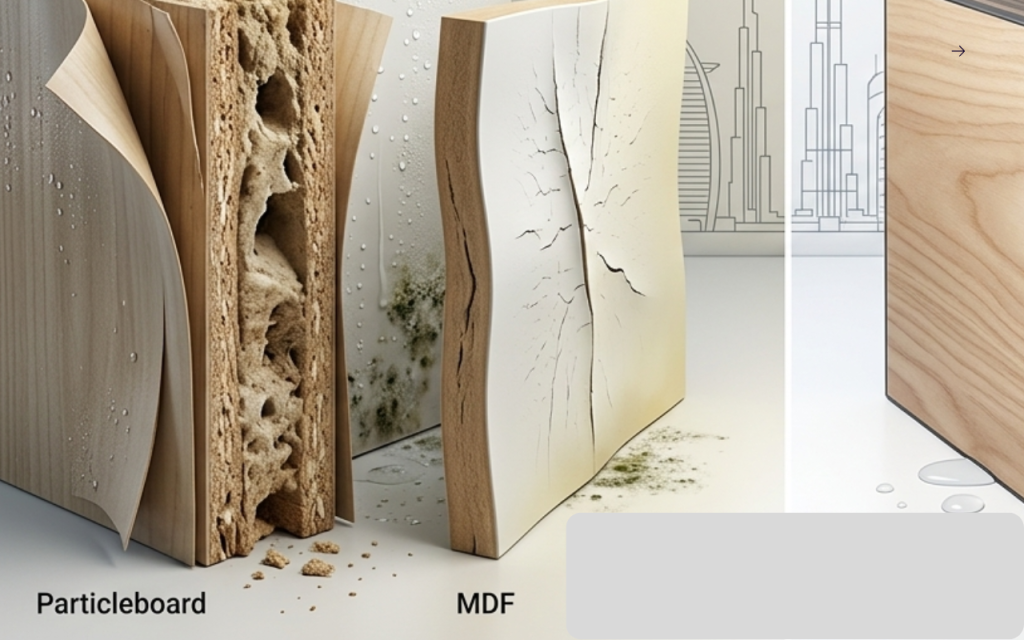
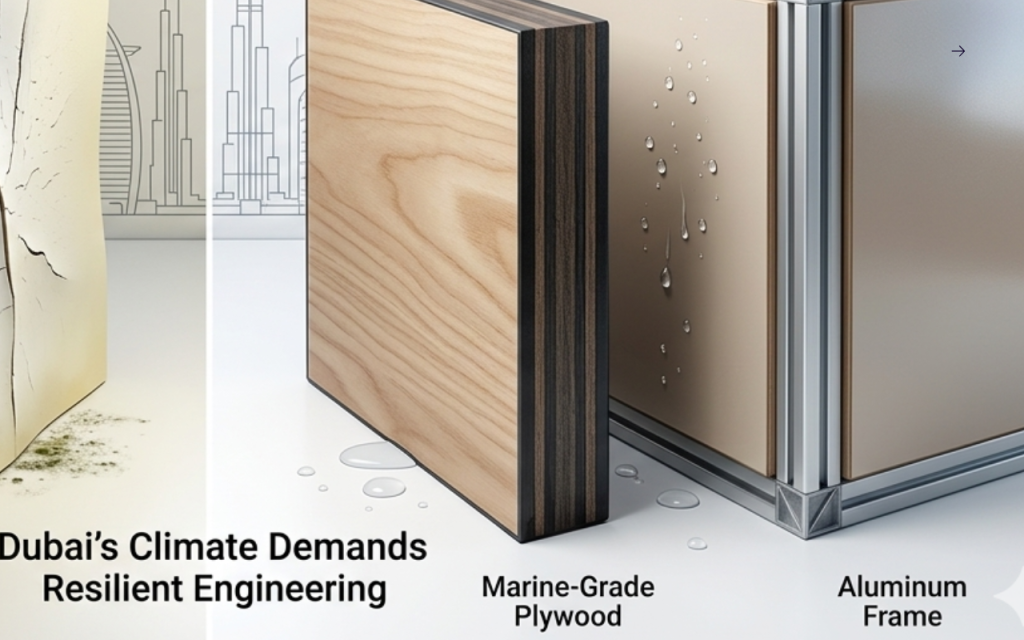
Avoid: Particleboard or MDF with inadequate moisture protection. Dubai humidity causes swelling, warping, and delamination within 2-3 years.
Choose: Marine-grade plywood with proper sealing, or aluminum/stainless steel frames with laminate panels. These withstand humidity without deterioration.
Finish Protection: Multiple coats of moisture-resistant finish protect wood from humidity. UV-resistant finishes prevent sun damage in villas with kitchen windows.
Countertop Materials:
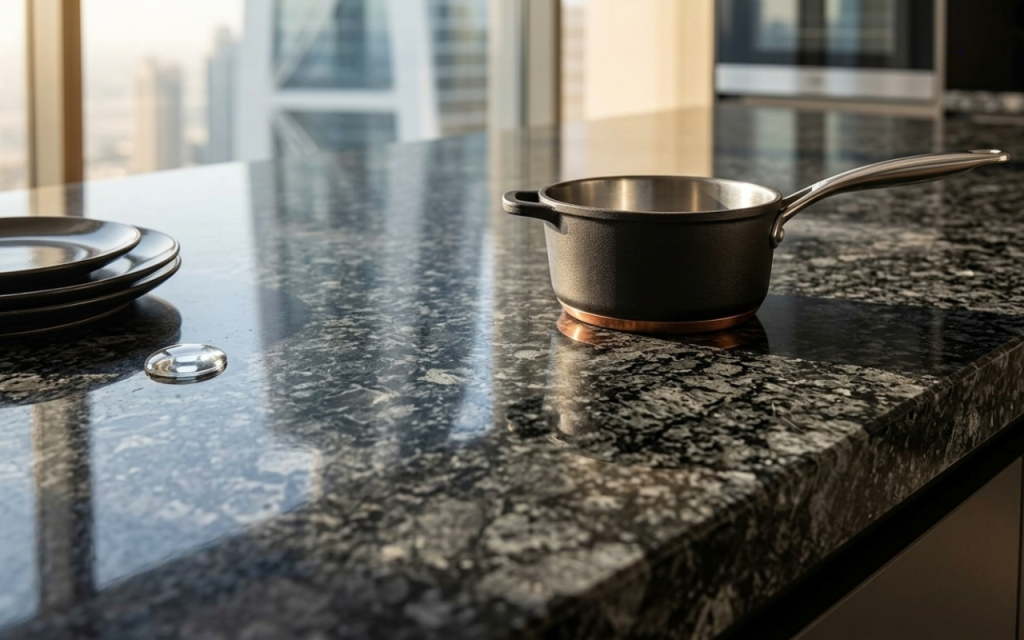
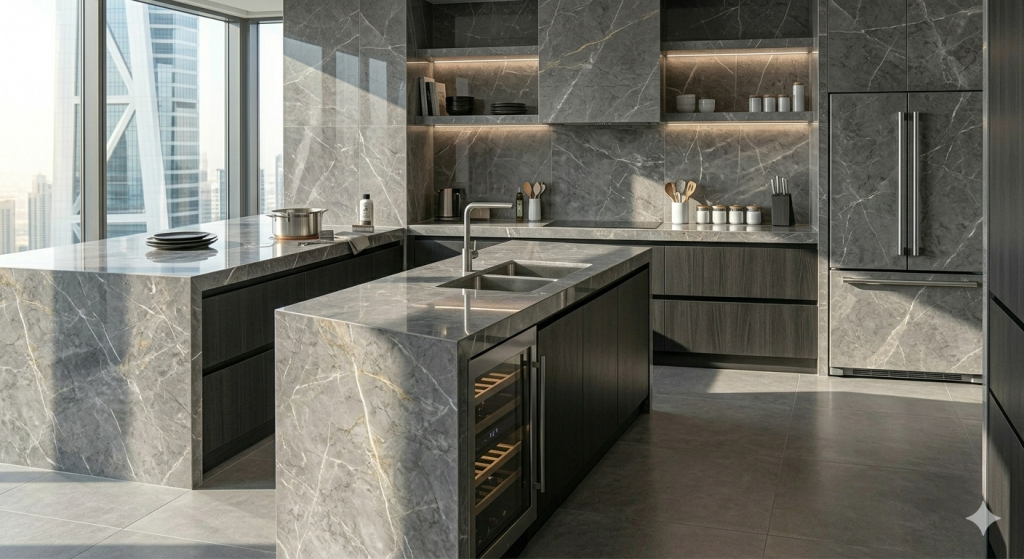
Granite: Natural stone performs well in Dubai. Heat-resistant, durable, available locally. Requires periodic sealing preventing stains.
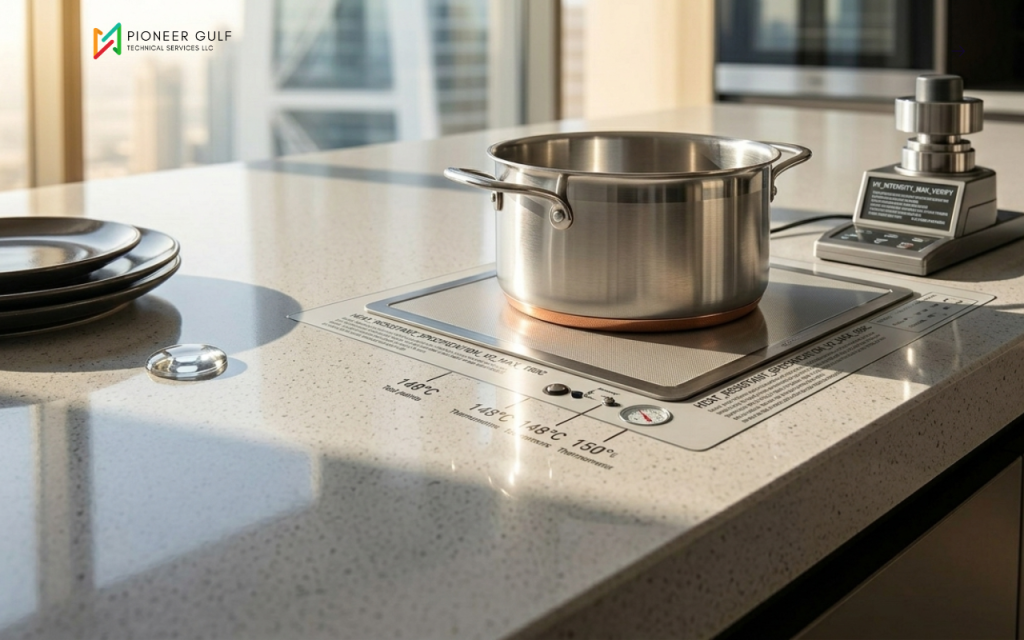
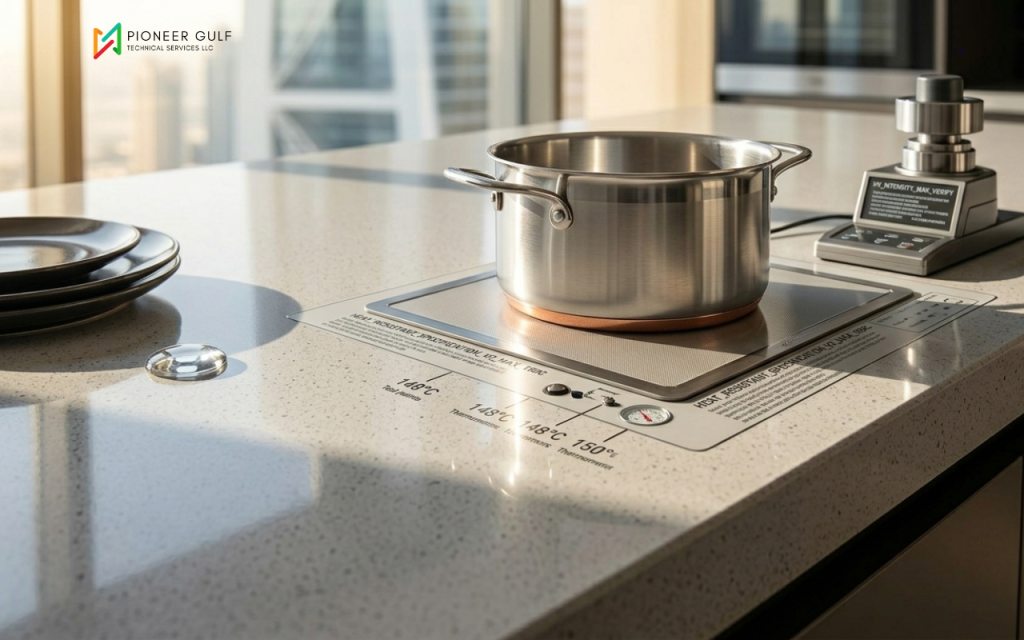
Engineered Quartz: Non-porous, doesn’t require sealing, heat-resistant to ~150°C. Good Dubai performance but verify UV resistance for areas with sun exposure.
Marble: Beautiful but porous. Requires frequent sealing and maintenance.
Acidic foods (citrus, tomatoes) can etch surface. Better suited for low-use areas.
Avoid: Laminate countertops. Heat from Dubai kitchens and potential water exposure cause delamination and warping.
Backsplash and Flooring:
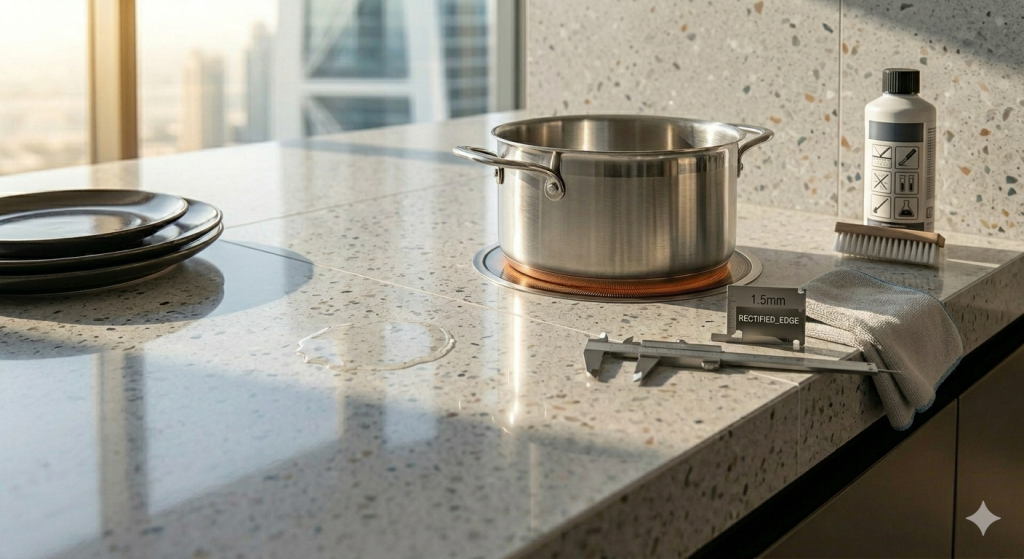
Porcelain Tile: Excellent Dubai performance. Heat-resistant, water-resistant, durable. Rectified tiles allow narrow grout lines (easier cleaning).
Natural Stone: Works well but requires sealing. Avoid highly polished finishes near cooking areas—spills create slip hazards.
Grout Selection: Epoxy grout resists staining and doesn’t require sealing. Worth extra cost in kitchen environments.
Hardware and Fixtures:
Quality Matters: Cabinet hardware experiences daily use. Cheap hinges and drawer slides fail within a year. European-quality hardware lasts 10-15 years.
Finish Selection: Brushed or satin finishes hide fingerprints and wear better than polished chrome. Verify finishes are corrosion-resistant—Dubai humidity affects some metals.
Material selection directly impacts renovation longevity. Spending 15-20% more on quality materials prevents replacement within 3-5 years—false economy savings that cost more long-term.
Approvals Required for Kitchen Renovation in Dubai
Dubai renovation projects require various approvals depending on property type and scope. Proceeding without proper approvals risks stop-work orders, fines, and complications when selling property.
Apartment Kitchen Renovations:
Building Management Approval: Submit renovation plans to building management typically 7-14 days before starting. Requirements usually include:
- Floor plan showing modifications
- Contractor details and insurance
- Timeline and working hours
- Elevator usage schedule for material delivery
- Deposit (refundable upon satisfactory completion)
Working Hours: Most Dubai buildings restrict noisy work to 9:00 AM – 5:00 PM, Saturday through Thursday. Friday often prohibits work entirely. Violations result in complaints, fines, or work stoppages.
Noise and Dust Management: Buildings require contractors to control dust spread and noise levels. Cover common areas during material transport. Clean elevators after use.
Structural Modifications: Removing any walls requires engineering assessment and Dubai Municipality approval verifying walls aren’t structural or contain essential services.
MEP Changes: Significant plumbing or electrical modifications may require building management technical review ensuring work doesn’t affect other units.
Villa Kitchen Renovations:
Community Guidelines: Gated communities (Emirates Hills, Arabian Ranches, Springs, etc.) have renovation guidelines. Submit plans to community management even for villas you own.
Dubai Municipality Permits: Structural changes, external alterations, or work affecting building envelope require Dubai Municipality permits. Processing typically takes 2-4 weeks.
Contractor Requirements: Some communities maintain approved contractor lists. Verify whether your chosen contractor is pre-approved or needs registration.
Timing Restrictions: Communities often restrict working hours similar to apartment buildings. Verify specific rules before scheduling work.
Inspection Requirements: Major renovations may require Municipality inspections before, during, and after work. Schedule these to avoid delays.
Consequences of Skipping Approvals:
- Stop-work orders halting projects mid-construction
- Fines from building management or Municipality
- Requirement to reverse completed work
- Difficulties obtaining completion certificates
- Problems when selling property (buyers’ banks require all work properly approved)
Budget 1-3 weeks for approval processes when planning timelines. Never start demolition before approvals are secured.
Choosing Kitchen Remodeling Contractors in Dubai
Dubai hosts hundreds of renovation companies claiming kitchen expertise. Quality varies from excellent to problematic. Smart contractor selection prevents most renovation nightmares.
Essential Credentials:
Dubai Municipality Trade License: Verify contractors hold valid trade licenses for renovation and construction. Request license numbers and verify on Municipality website.
Insurance Coverage: Professional contractors carry:
- Public liability insurance (minimum AED 1 million coverage)
- Worker’s compensation insurance
- Professional indemnity insurance
Uninsured contractors leave you liable for accidents, damage, or worker injuries.
Specialized Kitchen Experience: General renovation experience doesn’t guarantee kitchen expertise. Request portfolios showing completed kitchen projects specifically. Visit completed projects if possible.
Evaluation Questions:
“How do you handle project coordination?” Kitchens involve multiple trades—carpenters, plumbers, electricians, tile installers. Who coordinates these? Lack of clear coordination causes delays and quality issues.
“What’s included in your quote?” Itemized quotes should specify:
- Demolition and disposal
- Materials (with brands/grades specified)
- Labor for each trade
- Permits and approvals
- Project management
- Cleanup
Vague quotes hide costs revealed later.
“What’s your payment schedule?” Reasonable schedules tie payments to completion milestones:
- 30% deposit (materials procurement)
- 30% at rough-in completion (plumbing, electrical)
- 30% at substantial completion
- 10% final payment after snagging
Avoid contractors demanding >40% upfront or full payment before completion.
“How do you handle unforeseen issues?” Discoveries during demolition (unexpected structural elements, hidden damage) are common. Contractors should have change-order processes with written approvals before proceeding.
“What’s your timeline and what affects it?” Realistic timelines account for:
- Approval processing (1-3 weeks)
- Material procurement (2-6 weeks for custom items)
- Sequential trade work
- Drying/curing times
- Snagging and corrections
Suspiciously fast promises indicate unrealistic expectations.
Red Flags:
- Reluctance to provide detailed written quotes
- No physical office or showroom
- Unwillingness to provide customer references
- Pressure to decide immediately
- Quotes significantly below competitors (corners will be cut)
- Poor communication during quotation phase
Trust communication quality during sales process. If contractors are unresponsive or unclear before securing your deposit, imagine communication quality when issues arise.
When to Combine Kitchen Renovation with Other Home Maintenance
Kitchen renovations create access to systems normally hidden behind walls and cabinets. Strategic property owners use this opportunity for preventive maintenance avoiding future disruption.
Services to Combine with Kitchen Renovation:
AC Maintenance and Duct Cleaning: If kitchen has AC vents and return grills, access for duct cleaning service is easier during renovation. Clean ducts before installing new finishes prevent dust settling on fresh surfaces.
Plumbing System Service:
- Replace shutoff valves while walls are open
- Upgrade main water lines if undersized
- Address slow drains in adjacent bathrooms
- Inspect water heater if nearby
Preventing leaks through proactive replacement saves money versus emergency repairs damaging new cabinets.
Electrical Panel Upgrades: If kitchen electrical upgrades reveal panel capacity issues, replacing the panel during renovation makes sense. Doing it later requires cutting into new walls.
Pest Control Treatment: Treating wall cavities and under-cabinet areas during construction prevents future infestations. Harder to address after renovation completes.
Water Tank Cleaning: If your building or villa has overhead tanks, cleaning during renovation ensures clean water to new fixtures.
Adjacent Space Updates: Small bathroom adjacent to kitchen? Update simultaneously sharing contractor coordination, material procurement, and reducing total disruption period.
Comprehensive planning prevents needing to disturb newly renovated spaces for maintenance that could have been addressed during construction.
Note: Any timelines or references mentioned are indicative and provided for general understanding only. We recommend consulting a expert for an accurate assessment before starting any project.
Frequently Asked Questions
A: Timeline varies based on scope and complexity. For standard apartment kitchen renovation (cabinet replacement, countertops, basic plumbing/electrical):
- Approval processing: 7-14 days
- Demolition and rough-in: 3-5 days
- Cabinet installation: 3-5 days
- Countertop templating and installation: 7-10 days (fabrication time)
- Finishing work (tile, paint, fixtures): 5-7 days
- Snagging and final touches: 2-3 days
Total realistic timeline: 4-6 weeks from approval submission to completion. Custom cabinets, structural modifications, or material delays extend timelines to 8-12 weeks.
A: Yes, apartment renovations require building management approval before starting work. Submit:
- Floor plans showing modifications
- Contractor insurance and trade license
- Work timeline
- Elevator usage schedule
Processing typically takes 7-14 days. Working without approval risks stop-work orders, fines, and complications when selling.
A: Comprehensive kitchen renovation includes:
- Demolition of existing kitchen
- Waste disposal
- Plumbing modifications (if layout changes)
- Electrical upgrades and new circuits
- Cabinet supply and installation
- Countertop fabrication and installation
- Backsplash installation
- Flooring (if part of scope)
- Painting
- Fixture installation (sinks, faucets, lighting)
- Final cleanup
Appliances typically purchased separately unless contractor specifies inclusion. Verify scope details in written quotations.
A: No. Active kitchen renovation requires:
- Water shutoff for plumbing work
- Electrical disconnection for safety
- Dust generation affecting food safety
- Space occupation by workers and materials
Plan alternative meal arrangements—eating out, preparing food in other areas, or temporary kitchen setup in another room. Renovation typically renders kitchens unusable for 3-5 weeks.
A: Most common delay factors:
- Approval processing – Building management reviews taking longer than expected
- Material availability – Custom cabinets, imported countertops, specialty fixtures on backorder
- Unforeseen discoveries – Hidden structural elements, unexpected plumbing or electrical issues
- Trade coordination – Plumber unavailable when needed, electrician delayed on other project
- Design changes – Client decisions made mid-project requiring re-work
- Shipping delays – Global supply chain affecting imported materials
Mitigate by starting approval early, ordering materials before demolition, working with contractors having good trade relationships, and finalizing all design decisions before starting.
A: Costs vary significantly based on size, quality, and scope:
Budget Kitchen (Basic finishes, standard materials):
- Small kitchen (3-4 linear meters): AED 25,000-45,000
- Medium kitchen (5-6 linear meters): AED 45,000-75,000
Mid-Range Kitchen (Quality materials, semi-custom cabinets):
- Small kitchen: AED 50,000-80,000
- Medium kitchen: AED 80,000-130,000
- Large kitchen: AED 130,000-180,000
Premium Kitchen (High-end finishes, custom cabinets):
- Medium kitchen: AED 150,000-250,000
- Large kitchen: AED 250,000-400,000+
These estimates include cabinets, countertops, installation, and basic appliance relocation. Add 15-20% contingency for unforeseen issues. Major structural changes, high-end appliances, or complex designs increase costs.
A: Purchase appliances before finalizing cabinet design. Cabinet dimensions must accommodate appliances precisely. Provide exact appliance dimensions (including clearances) to cabinet designer. Refrigerators, dishwashers, and built-in ovens affect cabinet sizing significantly. Buying appliances after cabinets are ordered risks fit issues requiring modifications or appliance returns.
A: Phasing is possible but not always practical:
Can Work in Phases:
- Cabinets now, countertops later (if using temporary work surface)
- Essential work now, cosmetic updates later
- Upper cabinets now, island later
Difficult to Phase:
- Plumbing work (requires complete disruption)
- Flooring (needs empty kitchen)
- Electrical upgrades (safety requires completion)
Phasing may increase total cost due to repeated mobilization, coordination challenges, and potential re-work. Evaluate whether savings justify extended disruption period.
A: Common discoveries (water damage, structural issues, code violations) require decisions:
- Stop work immediately – Don’t proceed until issue is assessed
- Get professional assessment – Structural issues need engineering review
- Request written change order – Document scope changes, costs, timeline impact
- Verify necessity – Ensure recommendation is genuine requirement, not upselling
- Approve in writing – Don’t allow work to proceed on verbal approvals
Reputable contractors document unexpected findings with photos, explain options clearly, and proceed only with written authorization. Resist pressure to make immediate decisions on major issues—take time to understand and evaluate options.